How to Use Menu Tags to Increase Restaurant Sales (Menu Engineering Guide)
Menu engineering is the practice of structuring and presenting menu items to influence customer decisions and improve profitability.
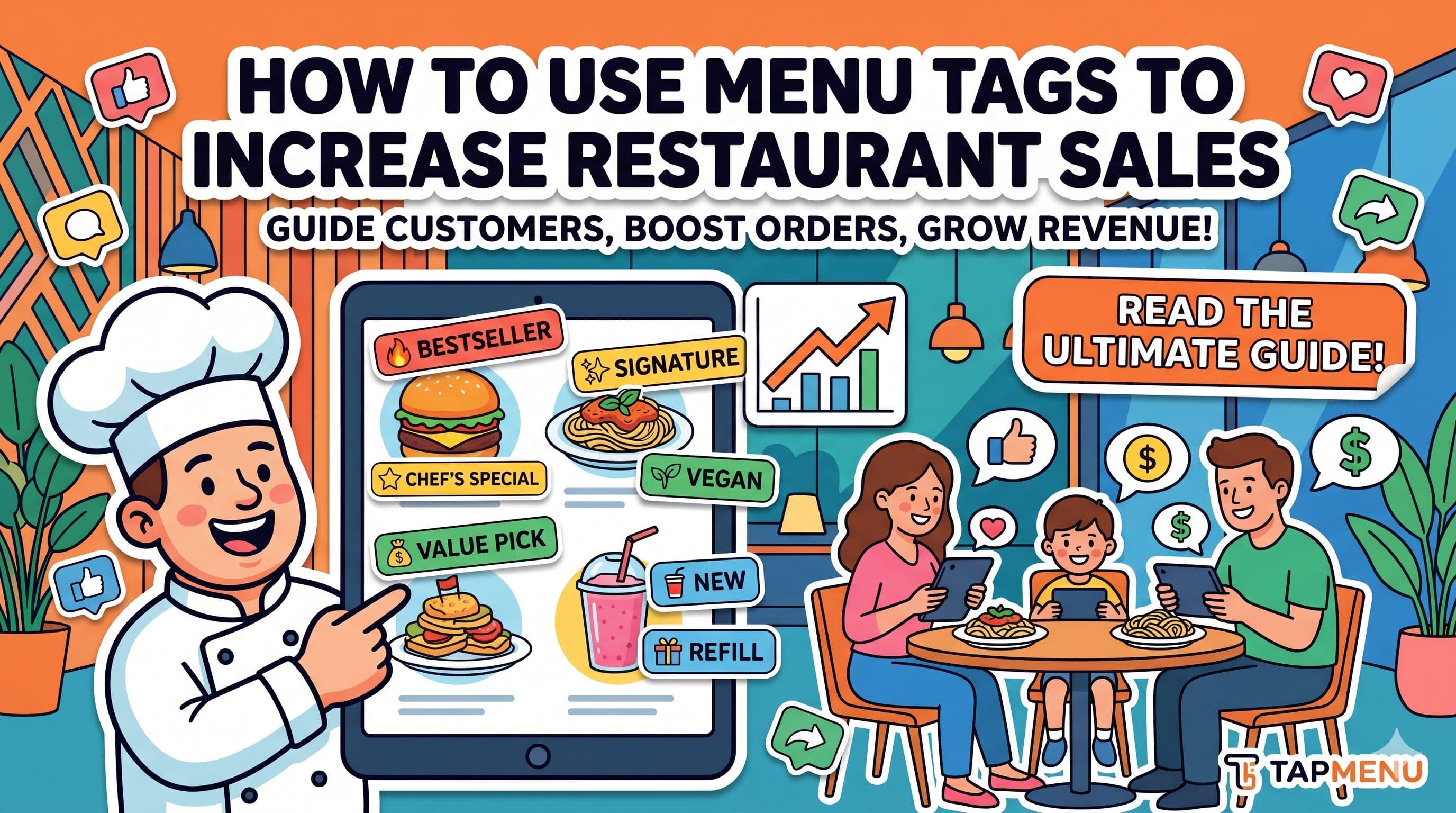
Executive Summary:
Menu tags are the GPS of a digital menu. Labels like Bestseller, Chef’s Special, and Combo help guide customer attention, reduce decision friction, and promote higher-margin items. Used strategically, they can support higher average order value and better menu performance , without changing your prices.
What Are Menu Tags in a Digital Menu?
Menu tags are visual labels attached to menu items to help customers make decisions faster.
Examples include:
Bestseller
Popular
Chef’s Special
Combo
Value Pick
Seasonal
They do more than decorate a menu.
They influence what customers notice first.
And what customers notice first often shapes what they order.
Tags do not change what you sell.
They change what customers notice.
That is where menu psychology begins.
What Is Menu Engineering?
Menu engineering is the practice of designing and structuring a menu to improve profitability.
Traditionally, restaurants used menu layout, pricing design, and placement.
Digital menus now add a new layer:
Visual tags
Promotions
Recommendation cues
Upsell triggers
This makes tags one of the simplest tools in restaurant menu psychology.
How Does Social Proof Increase Restaurant Orders?
Customers often look for signals that reduce uncertainty.
This is where the Social Proof principle works.
Use tags like:
Bestseller
Popular
Most Ordered
Local Favourite
These tell hesitant diners:
“This is a safe, proven choice.”
Example
Instead of showing five pasta dishes equally…
highlight one:
🔥 Bestseller
That small cue can pull attention toward that item first.
How Recommendation Tags Help Sell High-Margin Items
Every restaurant has items that are profitable but overlooked.
Bring those forward with recommendation tags:
Signature
Chef’s Special
House Special
Recommended
These tags add perceived expertise.
They simulate the kind of recommendation a great server might give.
Example
Without tag:
Truffle Mushroom Pasta — £16
With tag:
⭐ Chef’s Special
Same dish. Different perceived value.
How Combo Tags Increase Average Order Value
One of the simplest restaurant upselling strategies is value framing.
Use tags like:
Combo
Value Pick
Best Value
These shift perception from:
“I’m spending more”
to
“I’m getting a better deal.”
Example
Instead of:
Burger — £12
Present:
🔥 Bestseller
💰 Value Combo
Burger + Fries + Drink — £15
A £3 difference suddenly feels rational.
That is menu engineering at work.
How Scarcity Tags Create Urgency
Scarcity, used honestly, can increase interest and trial.
Use tags like:
Limited Edition
Seasonal
Fresh Today
New
These work especially well for:
Chef specials
Weekend dishes
Seasonal menus
The scarcity principle can trigger quicker decisions when used sparingly.
3 Golden Rules for Using Menu Tags
1. Tag Selectively (Follow the 80/20 Rule)
Only tag around 20–30% of items.
If everything is “special,” nothing stands out.
Too many tags create visual noise.
2. Use Tags to Push Margin, Not Everything
Don’t tag random items.
Use tags on:
Bestsellers
High-margin dishes
Upsell opportunities
Use them strategically.
3. Review Performance Regularly
Use menu performance signals to see:
Which tagged items get attention
Which combos attract clicks
Which promotions generate interest
If a tagged item gets views but little engagement, adjust the positioning.
The Phygital Advantage: Use Tags Beyond the Screen
Smart operators match digital tags with physical merchandising.
Example:
If your digital menu shows:
⭐ Signature Cocktail
Match it with:
Table tent card
Poster
Counter sign
This repetition strengthens recall and influences choice.
The same message seen twice is often more persuasive than seen once.
A Simple Tag Strategy You Can Use Today
Start with just three categories:
Social Proof
Bestseller
Popular
Margin Drivers
Signature
Recommended
Upsell Tags
Combo
Value Pick
This alone can improve how customers navigate your menu.
Key Takeaways
Menu tags help guide customer attention
Social proof tags reduce hesitation
Recommendation tags support high-margin items
Combo tags can support higher average order value
Scarcity tags can create urgency
Tag only 20–30% of items for best effect
Frequently Asked Questions
Do menu tags increase restaurant sales?
Used strategically, menu tags can help highlight profitable items, encourage upsells, and improve average order value.
What tags work best on restaurant menus?
Common high-performing tags include:
Bestseller
Chef’s Special
Combo
Value Pick
Seasonal
How many menu items should have tags?
A practical rule is tagging only 20–30% of items.
This keeps tags effective without clutter.
What is menu engineering?
Menu engineering is the practice of structuring and presenting menu items to influence customer decisions and improve profitability.
Final Thought
Most restaurants treat tags as decoration.
Smart restaurants treat them as decision tools.
A label as simple as:
“Bestseller”
can influence what customers notice…
what they order…
and what they spend.
Sometimes increasing sales starts with changing just one word.
Want to test these ideas yourself?
Start with three tagged items in your menu this week and watch what customers gravitate toward.